Project 10

Challenge
A stent insertion process involved rapid chilling of the stent using a high-pressure gas stream at cryogenic temperatures, followed by a controlled heating phase to remove ice and condensation. A detailed investigation was undertaken to improve the performance, reliability and cycle time of the process.
Engineering Approach
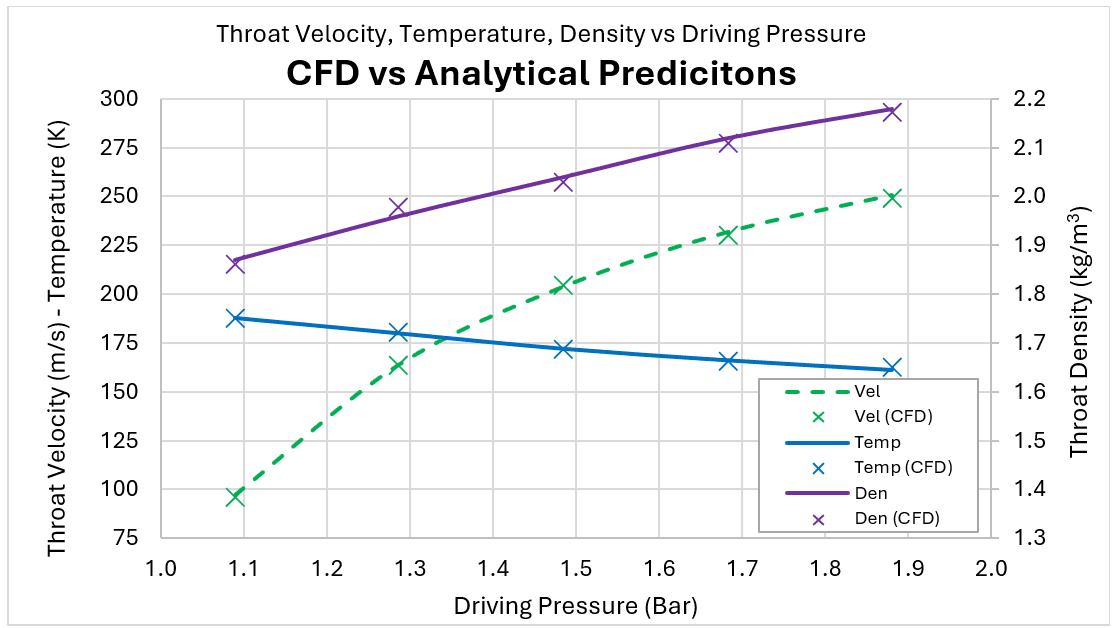
A detailed mathematical model was developed from the governing thermodynamic, heat-transfer and fluid-flow relationships to characterise the process and identify the principal parameters controlling its performance. CFD and transient thermal finite-element studies were then undertaken to investigate the chilling and heating processes in greater detail. The analytical and numerical predictions agreed closely and were used to guide a comprehensive Design of Experiments (DOE) and experimental programme, allowing the models to be assessed against physical test results and the process to be systematically optimised.
Outcome
Significant process improvements were achieved.
x3 -> effective refrigeration
x2 -> delivered heat
x2 -> Reliability
Significantly reduced -> Cycle time
The programme also developed a method for preventing ice and condensation formation, identified two alternative approaches for implementing the process, and established the parametric operating requirements for processing oversized stents.