
☰
01: An Ode to Engineering
The quiet discipline that has shaped our civilisation.
09 September 2026
Every morning, people wake to an electric alarm, put on manufactured clothes, live in buildings that are heated or cooled, drink clean water and eat food planted, harvested, processed and transported using machines. We travel on engineered roads, railways and aircraft, communicate instantly across the planet and have even learned to leave it. Engineering is everywhere. Perhaps the remarkable thing is that much of it is almost invisible — largely because it works.

Bone Needles – 40,000 BC
An Ancient Craft
Engineering is as old as humanity. The first engineers shaped stone into tools and weapons and fashioned needles that enabled clothing for cold climates. As civilisation developed, they further harvested and worked the “stones”, from flint to copper to bronze to iron. They constructed irrigation systems, wells, roads, bridges, buildings, ships and mechanisms.
Rome provides some extraordinary examples. The Pantheon, completed almost 2,000 years ago, still contains the world's largest unreinforced concrete dome, a concrete which can self-heal cracks. Roman aqueducts carried water across vast distances using carefully controlled gradients. Their roads, bridges, ports and infrastructure allowed cities and trade to operate on a scale that human labour alone could never have supported. Cites depend on engineering and civilisation depends on cities – it is why the empire ultimately shifted eastwards towards her major cities.
Enabling Civilisation
By scaling up sanitation, transport, and structural design, engineering freed humanity from mere subsistence living and cities developed. This freed up labour so that artists, poets, sculptors, doctors, educators, etc. could ply their trade. This is how civilisations developed and grew and it utterly depended on engineering.
A key driver of civilisation is energy. Water wheels and windmills were followed by steam engines powered by coal, helping trigger the Industrial Revolution. Internal-combustion engines provided still greater mobility, while electricity generation, motors and interconnected grids transformed homes and industry. Eventually, we arrived back at the stones as we harvested uranium to release the power of the atom.
Modern civilisation, with its telecommunications, aviation, electronics, computing, med-tech, etc. would be almost unimaginable without these advances. Today that technological transformation continues with artificial intelligence.

Aqueduct of Segovia – 1st Century AD
So What Is Engineering?
A Stone Age engineer would find our technology incomprehensible. Yet the fundamental task has changed surprisingly little: understand physical reality sufficiently well to make something useful work reliably. Science helps us understand the natural world. Engineering draws upon that understanding to solve practical problems. But an engineering solution faces additional constraints. It must work. It must be safe. It must be manufacturable and affordable. It must survive. Increasingly, it must also use resources responsibly.
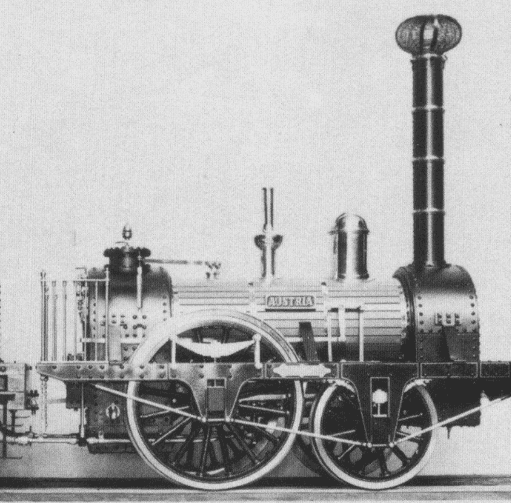
Steam Engine – Early 1830’s
The Extraordinary Becomes Ordinary
Engineering rarely attracts much attention when it succeeds. The bridge doesn't fall down. The aircraft lands. The water is clean. The medical device works. The lights come on. Behind these apparently ordinary events lie centuries of accumulated knowledge and the work of countless engineers across many disciplines. Perhaps that is engineering's greatest compliment: When engineering is done well, the extraordinary becomes ordinary.

Concorde – 20th Century
ffdfdfd
dfdff
01: An Ode to Engineering
The quiet discipline that has shaped our civilisation.
09 September 2026
Every morning, people wake to an electric alarm, put on manufactured clothes, live in buildings that are heated or cooled, drink clean water and eat food planted, harvested, processed and transported using machines. We travel on engineered roads, railways and aircraft, communicate instantly across the planet and have even learned to leave it. Engineering is everywhere. Perhaps the remarkable thing is that much of it is almost invisible — largely because it works.
Bone Needles – 40,000 BC
An Ancient Craft
Engineering is as old as humanity. The first engineers shaped stone into tools and weapons and fashioned needles that enabled clothing for cold climates. As civilisation developed, they further harvested and worked the “stones”, from flint to copper to bronze to iron. They constructed irrigation systems, wells, roads, bridges, buildings, ships and mechanisms.
Rome provides some extraordinary examples. The Pantheon, completed almost 2,000 years ago, still contains the world's largest unreinforced concrete dome, a concrete which can self-heal cracks. Roman aqueducts carried water across vast distances using carefully controlled gradients. Their roads, bridges, ports and infrastructure allowed cities and trade to operate on a scale that human labour alone could never have supported. Cites depend on engineering and civilisation depends on cities – it is why the empire ultimately shifted eastwards towards her major cities.
Enabling Civilisation
By scaling up sanitation, transport, and structural design, engineering freed humanity from mere subsistence living and cities developed. This freed up labour so that artists, poets, sculptors, doctors, educators, etc. could ply their trade. This is how civilisations developed and grew and it utterly depended on engineering.
A key driver of civilisation is energy. Water wheels and windmills were followed by steam engines powered by coal, helping trigger the Industrial Revolution. Internal-combustion engines provided still greater mobility, while electricity generation, motors and interconnected grids transformed homes and industry. Eventually, we arrived back at the stones as we harvested uranium to release the power of the atom.
Modern civilisation, with its telecommunications, aviation, electronics, computing, med-tech, etc. would be almost unimaginable without these advances. Today that technological transformation continues with artificial intelligence.
Aqueduct of Segovia – 1st Century AD
So What Is Engineering?
A Stone Age engineer would find our technology incomprehensible. Yet the fundamental task has changed surprisingly little: understand physical reality sufficiently well to make something useful work reliably. Science helps us understand the natural world. Engineering draws upon that understanding to solve practical problems. But an engineering solution faces additional constraints. It must work. It must be safe. It must be manufacturable and affordable. It must survive. Increasingly, it must also use resources responsibly.
Steam Engine – Early 1830’s
The Extraordinary Becomes Ordinary
Engineering rarely attracts much attention when it succeeds. The bridge doesn't fall down. The aircraft lands. The water is clean. The medical device works. The lights come on. Behind these apparently ordinary events lie centuries of accumulated knowledge and the work of countless engineers across many disciplines. Perhaps that is engineering's greatest compliment: When engineering is done well, the extraordinary becomes ordinary.
Concorde – 20th Century
grgrgrgr